
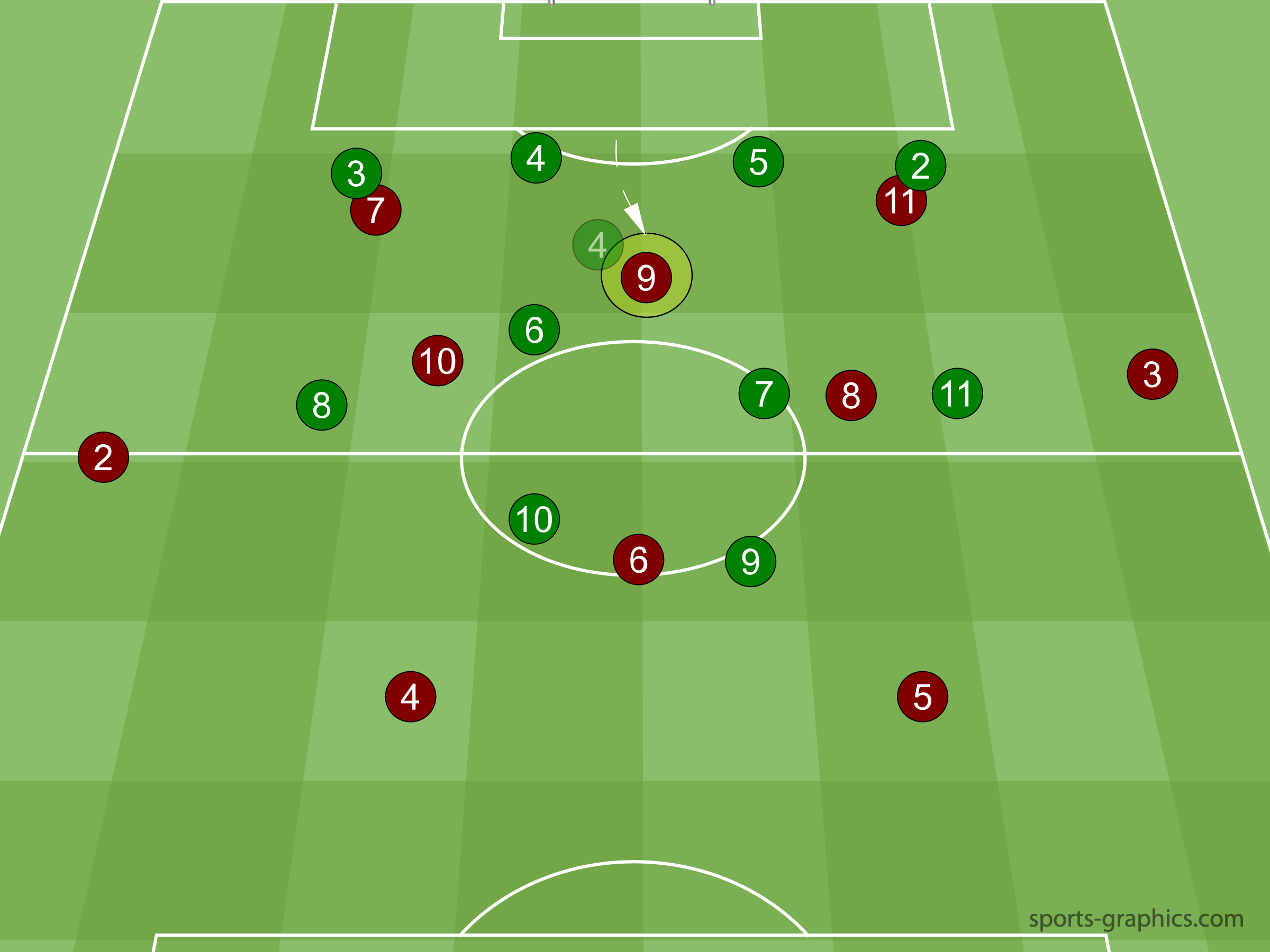
Tell a center back their job is to mark the striker, and a false 9 breaks the instruction before the game even starts. There's no striker standing on the last line to mark — he's already dropped into midfield, and now the center back has an impossible choice: follow him out of the back line and open a gap behind, or stay put and let him operate completely unmarked.
That choice, repeated every time the false 9 drops, is the entire point of the role.
Where the Idea Actually Came From
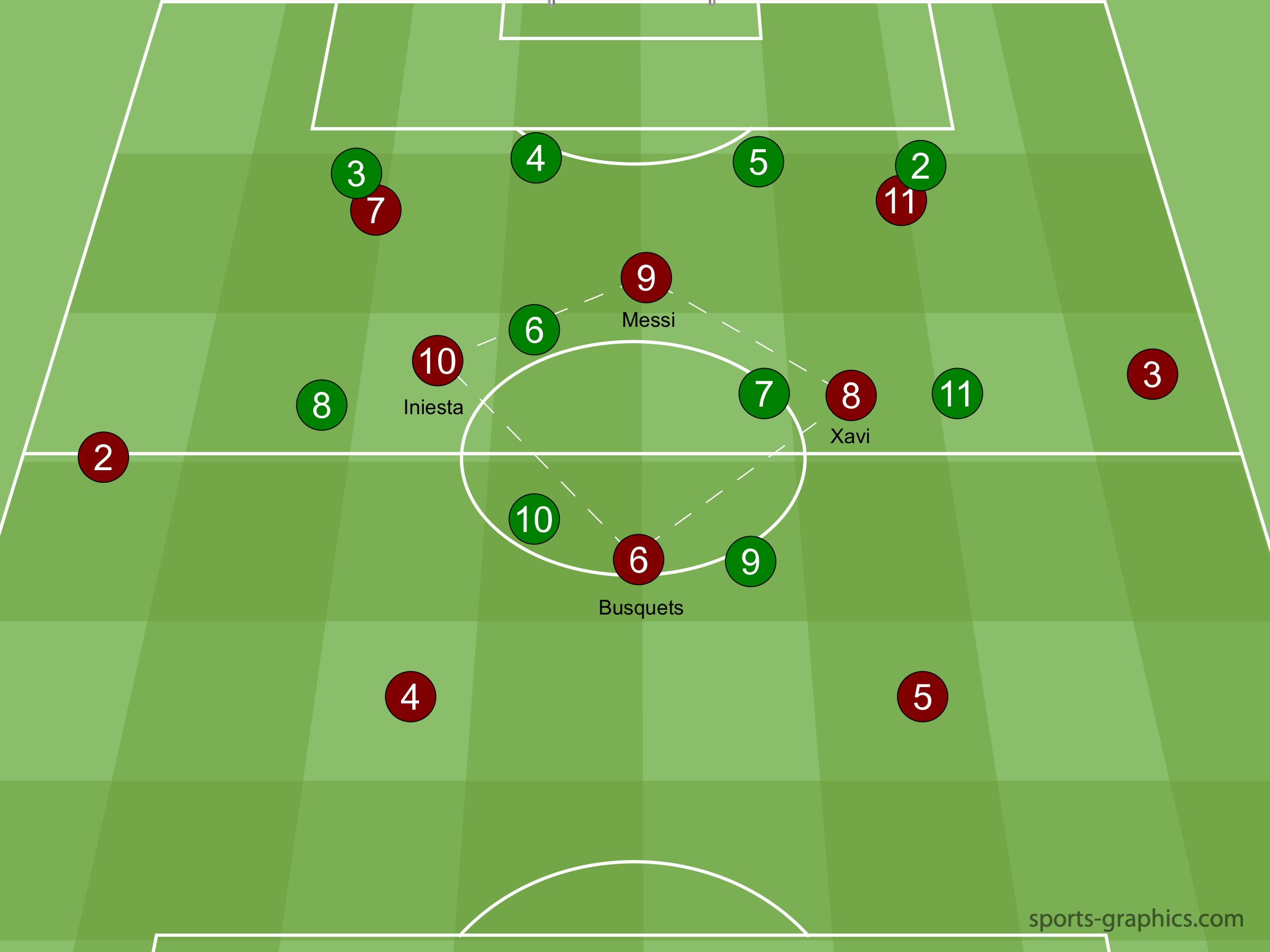
The clearest example in modern football is Lionel Messi under Pep Guardiola, in a Clásico at the Bernabéu in 2009. Messi barely touched the penalty area — instead he came deep to link with Xavi and Iniesta, and Real Madrid's center backs never followed him out. Xavi later explained why the plan worked so well: Guardiola kept telling his midfielders during the buildup that "that's where the game is, that's where the game is" — because with Messi dropping deep, Barcelona had a two-against-three advantage right through the middle of the pitch. Barcelona won 6-2.
What the Role Actually Solves
A false 9 isn't primarily a goalscoring position — it's a numbers-and-space problem, solved by removing a fixed target from the last line. Two things happen at once. First, the extra body in midfield usually creates a numerical advantage there, since the opponent's back line has nobody obvious left to occupy them. Second, if the opposing center backs do step out to follow the false 9, the space they vacate becomes available for wingers, overlapping fullbacks, or a late-arriving midfielder to attack instead.
Neither outcome is guaranteed — it depends entirely on what the defense decides to do. That uncertainty is exactly what makes a well-drilled false 9 so difficult to prepare for.
What the Position Actually Demands
A false 9 needs almost the opposite skill set from a traditional target forward. Hold-up play and aerial strength matter far less than vision, a quick first touch under pressure, and the game sense to know the instant a center back has been dragged out of position. Passing range matters too — a false 9 who can't find the runners exploiting the space behind does half the job and stops there.
It also demands something from the rest of the team: wide players and midfielders have to recognize the space opening up and arrive into it without being told, since the false 9's whole value depends on someone else punishing the gap he creates.
A Concrete Picture: Training the Decision, Not the Position
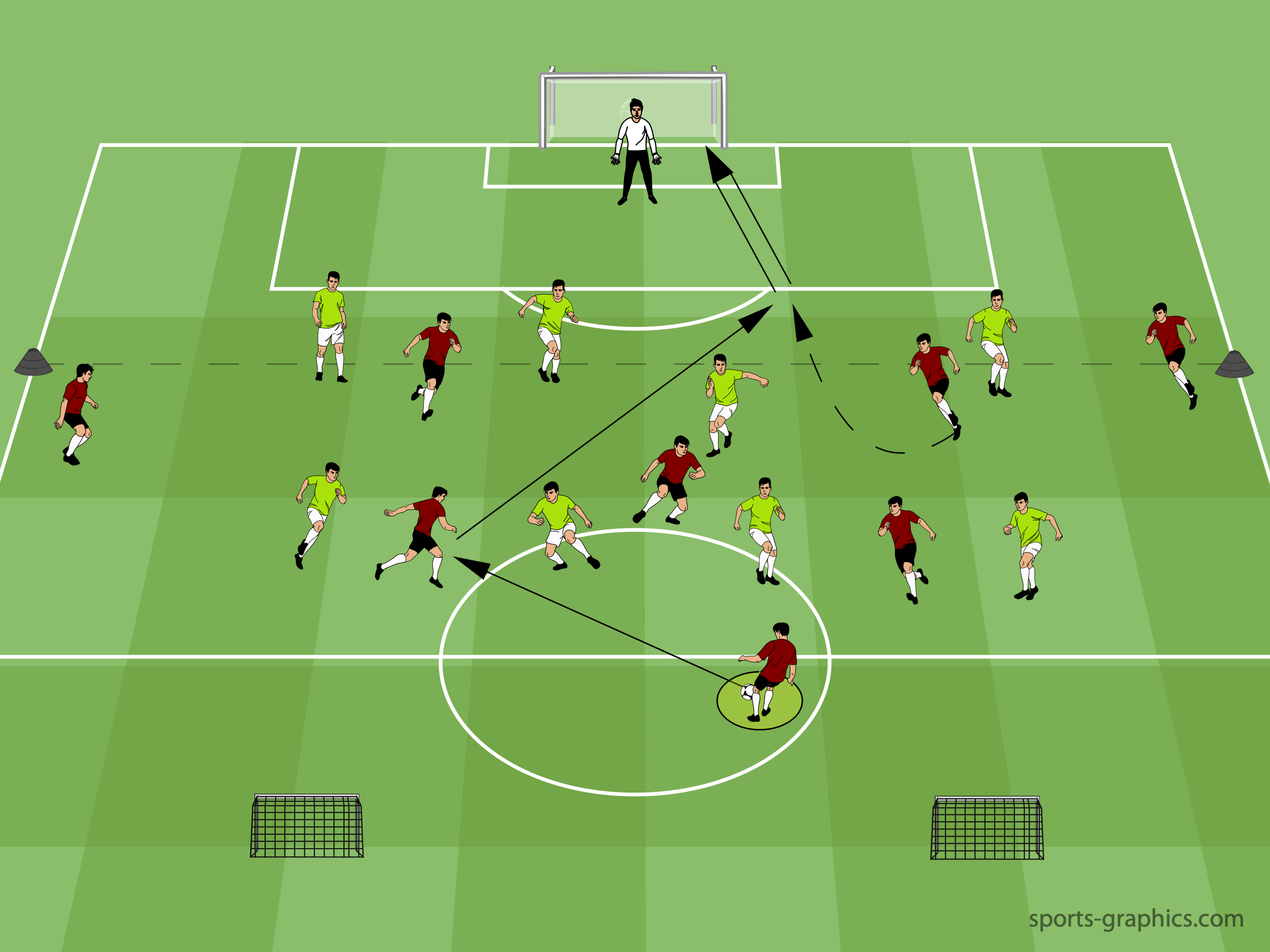
Set up a possession game with a floating central attacker who is free to drop into midfield whenever he wants, but the two markers on the last line have to decide, live, whether to follow him. Reward the attacking team specifically for combinations that happen in the space a marker leaves behind — not for combinations involving the false 9 himself. That reframes the drill correctly: the false 9 isn't the point of the exercise, the reaction he provokes is.
Run it both ways so the defending pair experiences both outcomes — following him and getting exposed centrally by his link play, and holding their line and getting exposed by his freedom to receive on the turn. Neither answer is wrong every time, which is exactly the discomfort a real false 9 is supposed to create.