
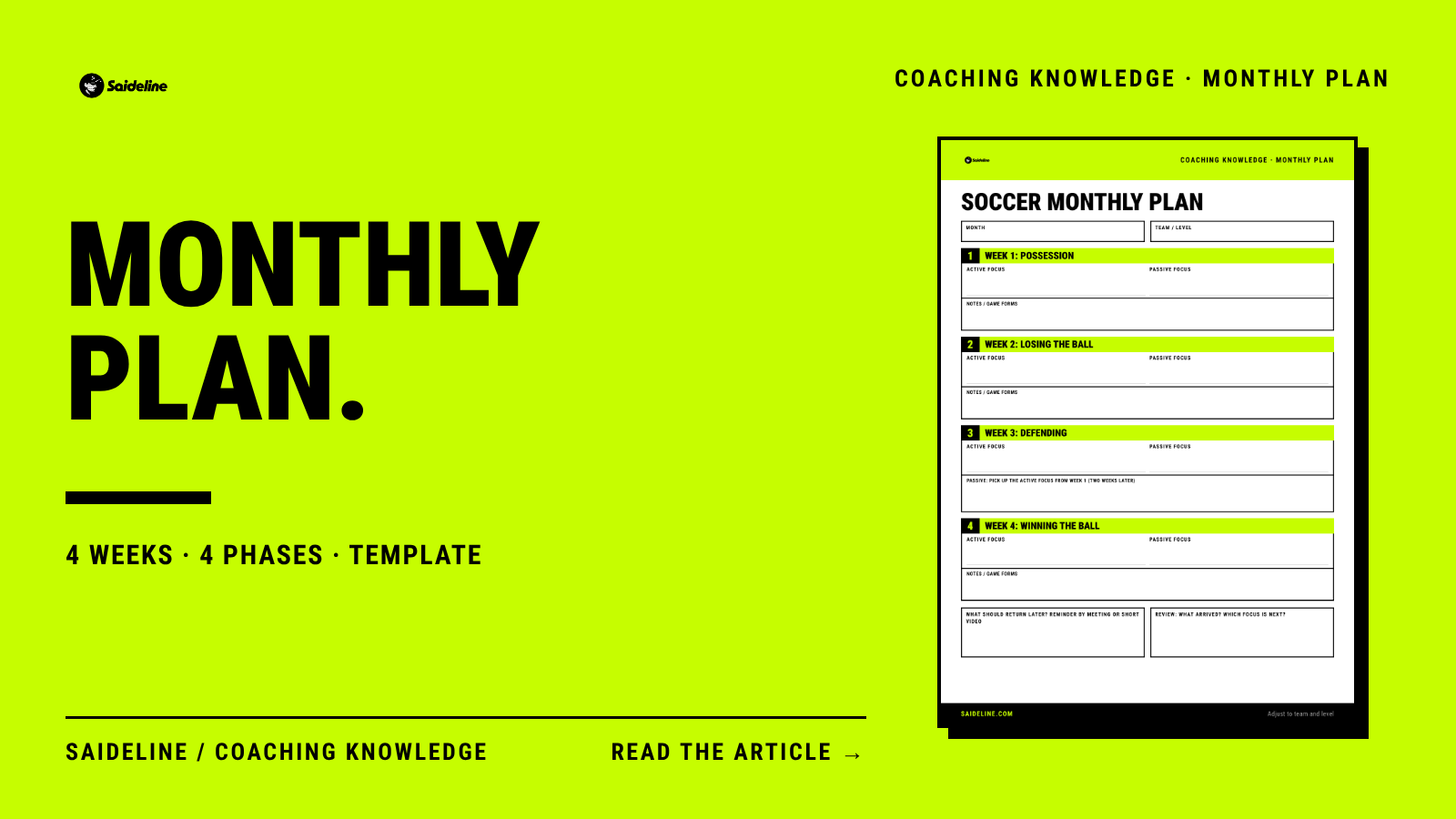
A monthly soccer training plan answers a simple question: which theme comes in which week, and how do the weeks connect? If you decide from scratch every week, you often train the same themes again and again and skip others. This article shows how to build a training month from four weeks and the four phases of the game, why the active focus of week one becomes the passive focus in week three, and what an example month can look like. At the end you can save a monthly plan template.
One month, four weeks, four phases of the game
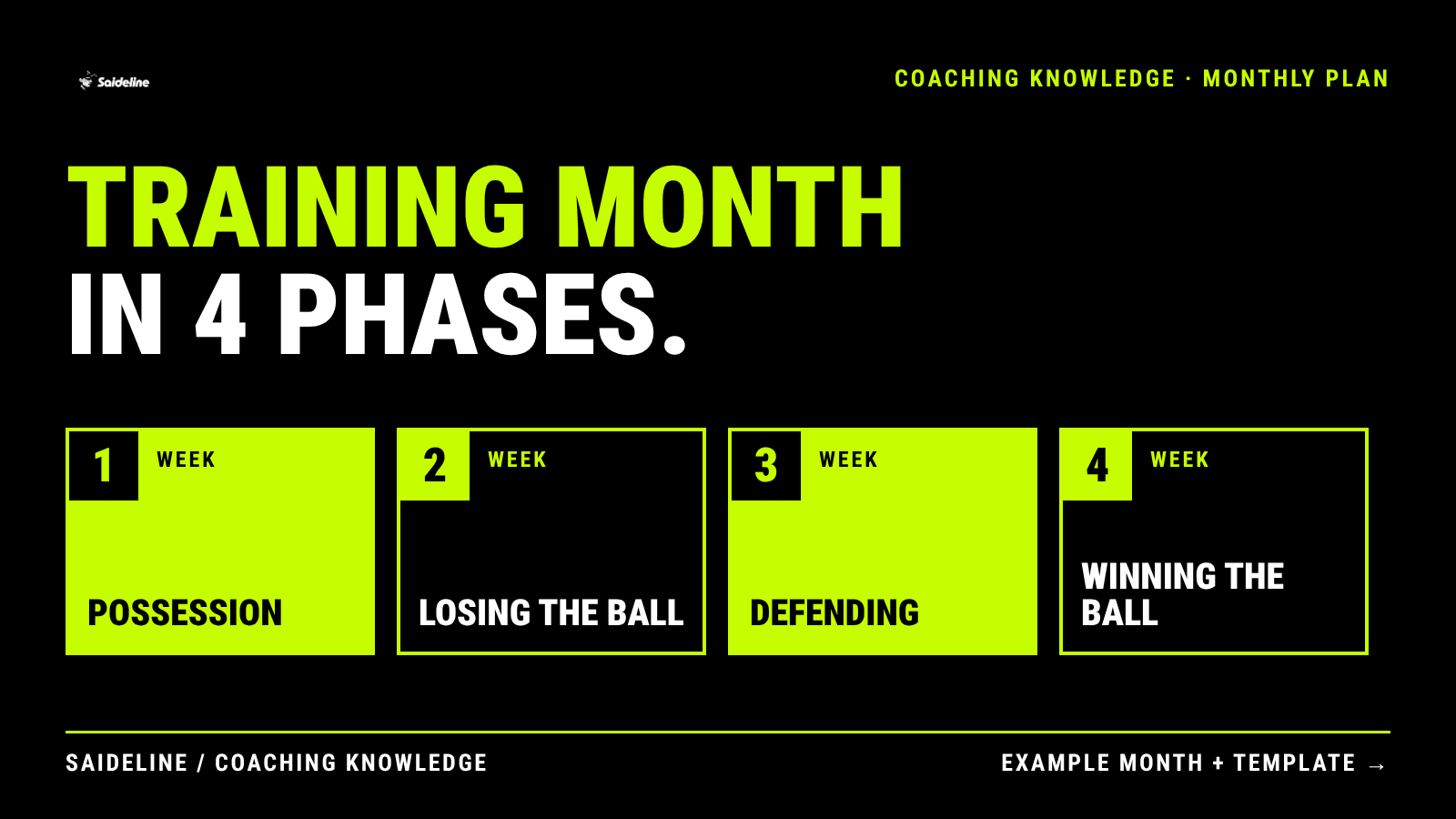
The basic idea is simple: each week belongs to one of the four phases of the game. That way every phase comes up once a month, and your team trains the whole game instead of one part of it. The order we use here:
- Week 1: possession. Your team has the ball and builds up, combines and finishes.
- Week 2: losing the ball. The switch to the opponent's possession, so counter-pressing or recovery runs.
- Week 3: defending against the ball. The opponent has the ball, and your team defends or presses.
- Week 4: winning the ball. The switch to your own possession, so the moment after the ball is won.
The phases themselves are explained in Phases of Play in Soccer: Plan Training Around the Game. How to set an active and a passive focus inside one week is shown in Soccer Training Week: Weekly Plan Around One Focus. The monthly plan adds the rhythm on top: four weeks, four themes, one cycle.
Active becomes passive: two weeks later
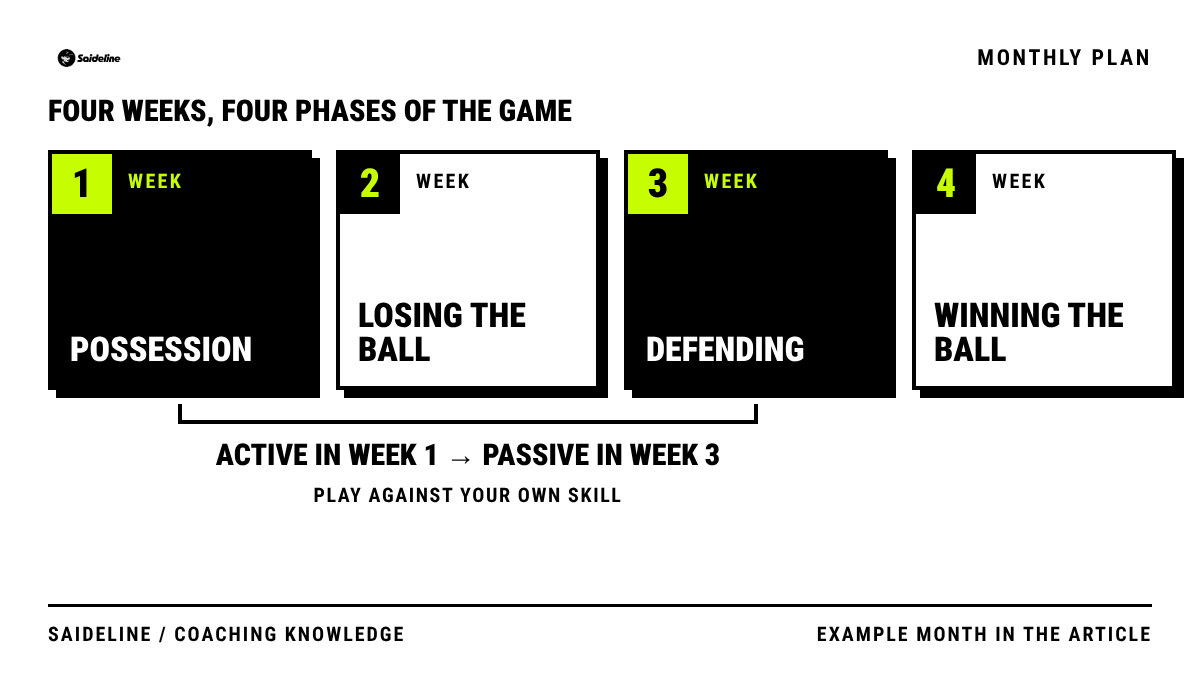
The trick of the monthly plan is the link between the weeks. The active focus of week one returns two weeks later as the passive focus. An example: in week one your team trains play between the lines, so passes into the space between the opponent's lines. In week three it plays against exactly this skill, against the player who receives between the lines.
This has two effects. First, your team knows the theme from the other side and understands it from both perspectives. Second, it plays against an improved version of its own skill. That raises the level of play and pulls players out of their comfort zone.
Themes return at growing intervals
A month is also a repetition plan. A theme that appears in week one does not come back the next day. It returns later and at longer intervals, for example as the passive focus in week three. In between, a short meeting or a short video reminds players of the theme. This is a principle from practice, not a study. It mainly helps you avoid ticking a theme off after one week.
Example month: four weeks with a focus
The following month is an example for orientation. Replace the themes with whatever your team needs right now.
- Week 1, possession: active focus play between the lines.
- Week 2, losing the ball: active focus counter-pressing, passive focus getting out of pressure. More in Gegenpressing Explained: Counter-Pressing in Soccer.
- Week 3, defending against the ball: active focus pressing, passive focus playing against the player between the lines (the counterpart to week one). For pressing games, see High Pressing Games That Train Reaction Speed, Not Fitness.
- Week 4, winning the ball: a theme of your choice for the switch after winning the ball.
Inside each week the routine from the weekly plan applies: give the picture at the start, coach while play runs in the middle, and at the end test and hand the responsibility to the players. The warm-up can follow the weekly theme too, as described in Soccer Warm-Up: A Routine in 6 Building Blocks.
After four weeks: review and plan again
At the end of the month it pays to look back. If you noted after each session what worked and what did not, and rated players briefly, for example with a grade or a keyword, you now have material for the next month. Check which themes arrived, which need to return and which focus is next. Without these notes you plan the next month from memory.
Monthly plan template to save
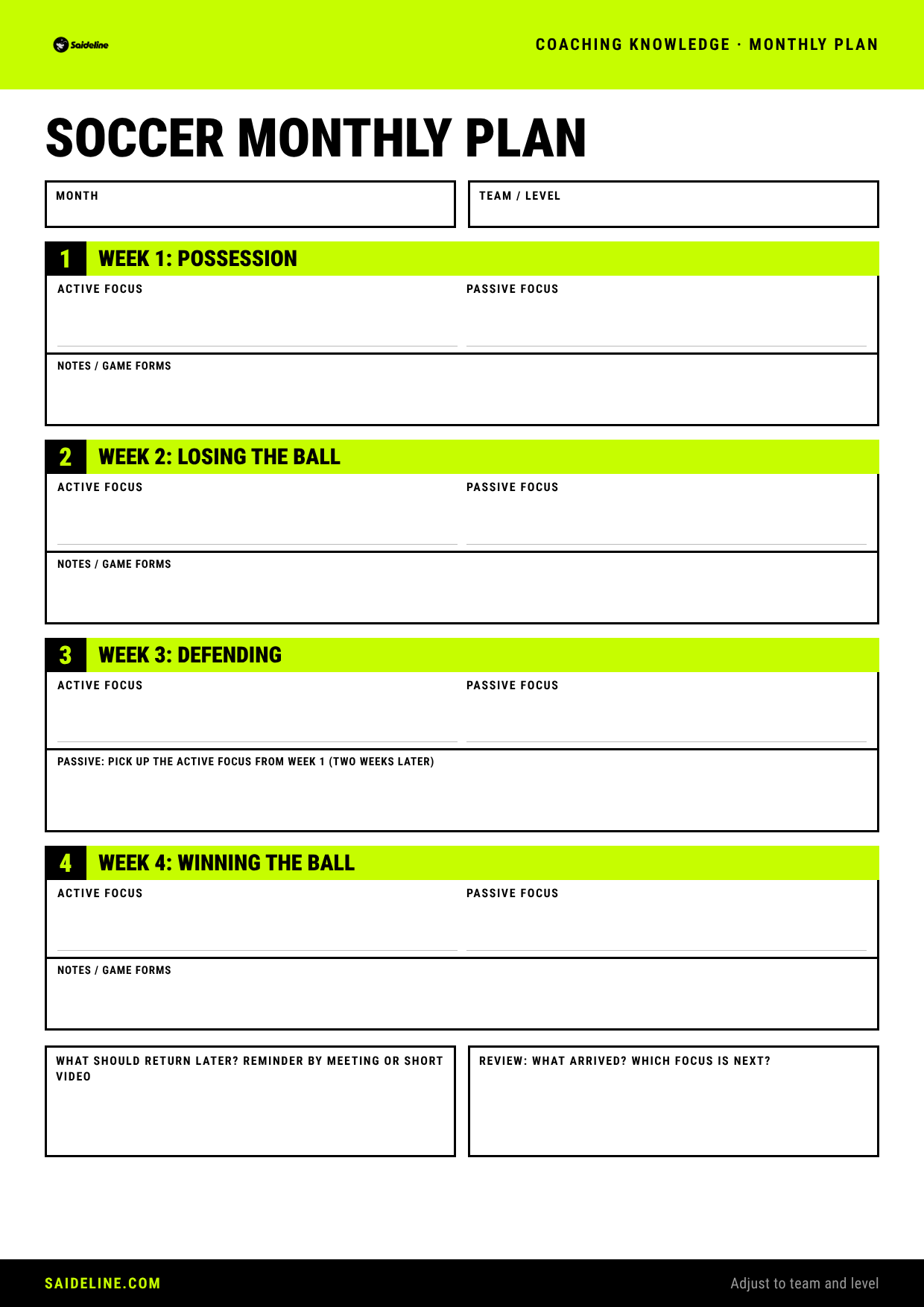
The template holds the month on one page: four weeks with the phase of the game, the active and the passive focus, a section for themes that should return later, and space for the review. Week three already carries the reminder to pick up the active focus from week one as the passive one. Tap or click the image and save it, to print it or fill it in digitally.
Planning the month in Saideline
In the Saideline calendar you switch between week, month and season view and enter sessions and matches. You set the weekly theme yourself, for example counter-press or mid block, and choose the load for each session: Low, Medium or High. From a calendar entry you plan the session directly, and you share plans and monthly overviews by link, email or WhatsApp with your assistant coach, who can comment on them. Saideline builds the sessions themselves from coach-made game forms. The calendar is open to all users, including during the three free sessions. More in Soccer Training Calendar: Plan Weeks, Load and Sessions, and for the free trial see Soccer Coaching App Pricing: Try 3 Sessions Free.
Frequently asked questions about the monthly soccer training plan
How do I build a monthly plan for soccer training?
Split the month into four weeks and give each week one phase of the game: possession, losing the ball, defending against the ball and winning the ball. Set one active and one passive focus per week.
What does "active becomes passive" mean?
The active focus of week one returns in week three as the passive focus. The team then plays against the skill it learned itself two weeks earlier.
Why a month with four phases?
Every phase of the game comes up regularly, and no theme sits untouched for long. A theme returns at longer intervals instead of disappearing after one week.
Do I have to keep the order of the phases?
No. The order possession, losing the ball, defending against the ball, winning the ball is a suggestion. What matters is that all four phases appear and that active themes return later as passive ones.
Conclusion
A training month does not need a complicated plan. Four weeks, four phases and the rule that today's active theme is the passive theme two weeks from now give your training a common thread. Take the template, enter the themes and check after four weeks which themes arrived and which need to return.
To connect the months into a full season, see Soccer Annual Training Plan: Cycles, Themes, Set Pieces.